Foundation Repair: Warning Signs That Should Not Be Ignored
Foundation walls bear the entire load of your home while enduring constant lateral soil pressure, seasonal freeze-thaw cycles, and shifting ground saturation. While small hairline cracks are common as concrete cures, certain crack patterns and structural symptoms indicate active foundation distress. Recognizing these signs early allows for non-invasive, cost-effective remediation.
Understanding Crack Patterns in Foundation Walls
Not all foundation cracks indicate the same issue. Poured concrete and concrete block foundations react differently to soil forces and structural settlement.
Vertical Hairline Cracks
Vertical hairline cracks (under 1/16 inch) often result from normal concrete shrinkage during initial curing. While they should be sealed against water ingress, they rarely represent immediate structural danger.
Horizontal Mid-Wall Cracks
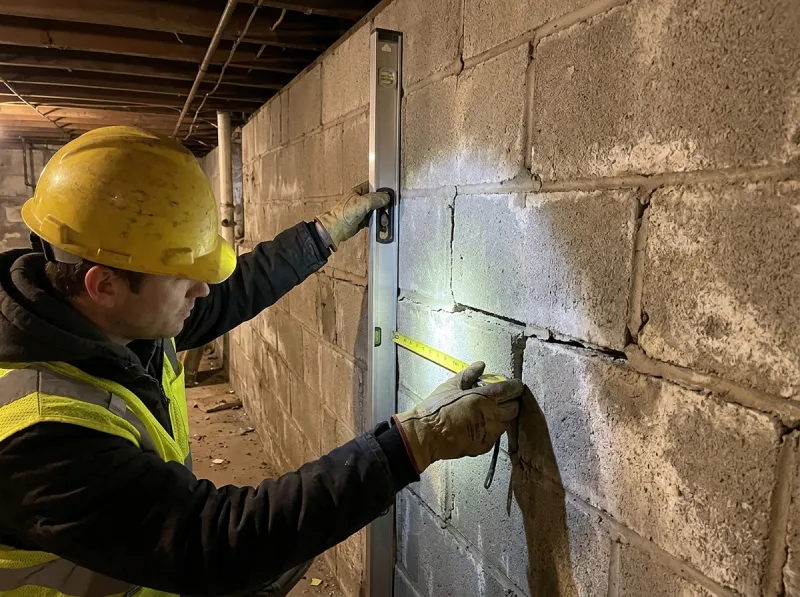
Horizontal cracks running across the middle of block or poured walls are a serious warning sign of lateral hydrostatic pressure or frost heave pushing the wall inward.
Stair-Step Cracks in Masonry Blocks
Stair-step cracks following mortar joints typically indicate differential foundation footing settlement under one corner or section of the structure.
Interior and Exterior Secondary Indicators
Foundation movement rarely remains confined to the basement. As foundation walls deflect or settle, the framing resting on them shifts, creating secondary symptoms throughout the home.
Watch for interior doors that suddenly bind or swing open, windows that are difficult to latch, diagonal cracks spreading from door frames, and gaps opening where drywall walls meet ceilings.
Modern Non-Invasive Structural Solutions
Decades ago, repairing a bowing foundation wall required extensive exterior excavation and heavy machinery. Today, aerospace-grade carbon fiber straps bonded with high-strength structural epoxy provide an ultra-strong reinforcement that arrests inward wall movement.
For cracked poured concrete walls without bowing, high-pressure polyurethane and epoxy port injections seal the full depth of the wall, permanently restoring water-tightness and structural bonding.
Frequently Asked Questions
Related Home Protection Services
Foundation Repair
Structural wall stabilization, carbon fiber straps, and crack injection.
Basement Waterproofing
Sub-floor drainage channels and sump pump systems managing water pressure.
Floor Stabilization & Support
Adjustable steel jacks supporting sagging subfloor joists and beams.
Related Articles
What Causes Basement Water Intrusion?
Understanding the hydraulic forces that drive water through foundation cracks.
Read GuideUnderstanding Sagging, Uneven, and Bouncy Floors
How subfloor deflection relates to foundation settling.
Read Guide