Basement Waterproofing: Understanding Your Options
When evaluating solutions for a wet basement, Ontario homeowners frequently encounter two distinct approaches: exterior excavation and interior sub-floor drainage. Both methods have distinct advantages, installation timelines, and site requirements. Understanding the operational differences helps you choose the most effective approach for your property.
Interior Sub-Floor Drainage Systems
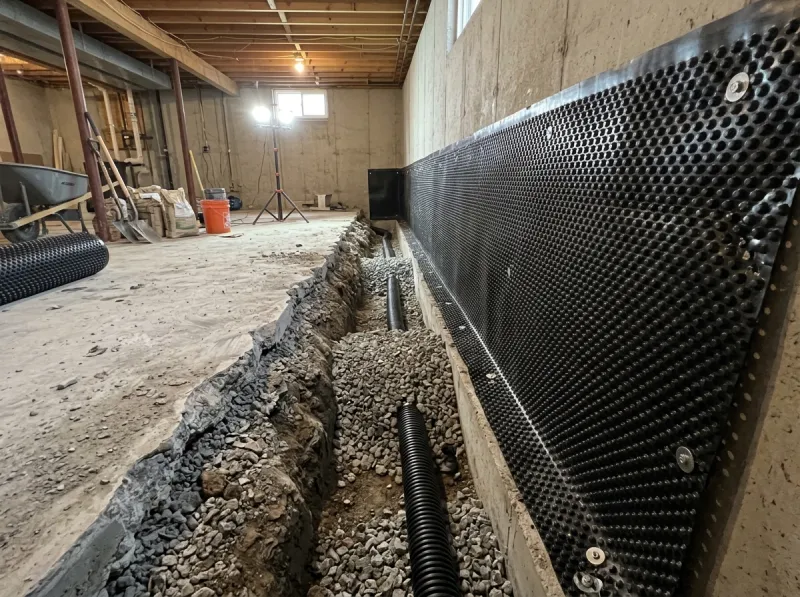
An interior drainage system is installed along the inside perimeter of your basement floor slab. Technicians trench a small section of the concrete floor adjacent to the footing, install perforated drainage piping surrounded by clear stone, and link it to a sealed sump pump basin.
A dimpled drainage membrane is attached to the lower foundation wall, ensuring any moisture seeping through porous concrete or cracks flows directly into the drainage channel rather than reaching the basement floor. The concrete floor is then professionally reinstated.
Key Advantages of Interior Drainage
Interior waterproofing requires no exterior digging, preserving your outdoor decks, air conditioning units, paved driveways, and landscaping. Work proceeds year-round regardless of Ontario winter weather.
Exterior Excavation & Waterproofing
Exterior waterproofing involves digging down to the foundation footing around the perimeter of the home, cleaning the wall, applying a rubberized elastomeric membrane, installing dimpled protection board, and laying new exterior weeping tiles covered in gravel.
While exterior waterproofing prevents water from contacting the concrete, it requires significant clearance around the home, disrupts exterior structures, and can be challenging to perform in tight urban properties with neighboring driveways or additions.
The Heart of the System: Sump Basin & Pump Protection
Regardless of the drainage approach, reliable water evacuation is essential. Modern installations use heavy-duty submersible cast-iron pumps seated in hermetically sealed basins equipped with airtight lids to prevent radon and moisture vapor from escaping into the basement.
In Ontario, where severe summer thunderstorms frequently cause power outages, a dedicated auxiliary 12V battery backup pump provides essential peace of mind.
Frequently Asked Questions
Related Home Protection Services
Basement Waterproofing
Interior sub-slab drainage systems and sealed dual-pump sump basins.
Foundation Repair
Epoxy and polyurethane injections restoring water-tightness to cracked concrete.
Moisture & Humidity Control
Commercial-grade dehumidifiers maintaining relative humidity below 55%.
Related Articles
What Causes Basement Water Intrusion?
Learn about hydrostatic pressure and seasonal groundwater dynamics.
Read GuideFoundation Repair: Warning Signs That Should Not Be Ignored
Identifying when basement leaks indicate active foundation distress.
Read Guide