Signs of Crawl Space Moisture Problems and What Homeowners Can Do
For many Ontario homeowners, the crawl space remains out of sight and out of mind until symptoms begin manifesting in the main living areas upstairs. Earth floors, seasonal runoff, and humid summer air combine to create high subterranean humidity. Understanding the early warning signs helps you protect your home's structural framing and indoor living environment.
Why Crawl Spaces Accumulate Significant Moisture
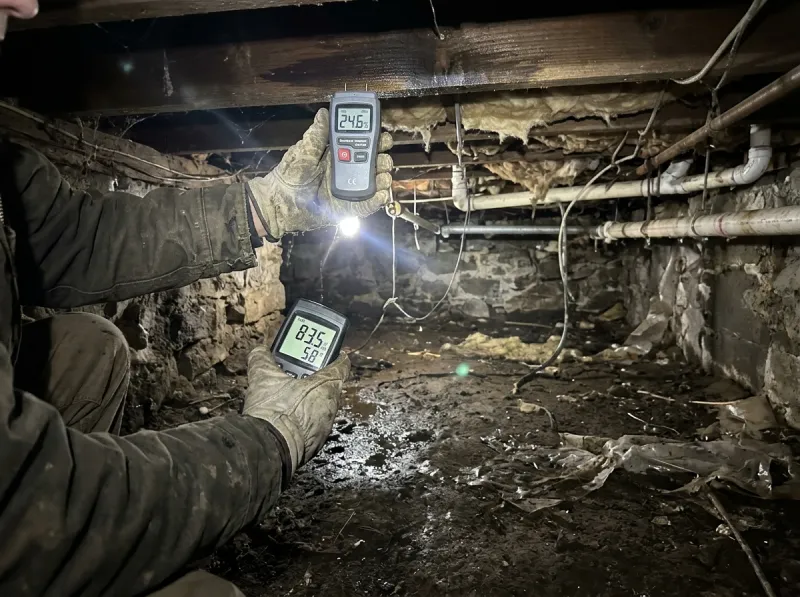
Unlike full basements with poured concrete slabs, many older or cottage-style crawl spaces in regions like Simcoe County, Kawartha Lakes, and Durham Region have exposed dirt or gravel floors. Capillary action continually draws subterranean moisture up to the surface, where it evaporates directly into the crawl space air.
Furthermore, traditional exterior foundation vents—originally intended to provide ventilation—often exacerbate the problem in Ontario summers. When warm, muggy outdoor air enters a cool below-grade space, relative humidity climbs rapidly and condenses on cooler structural surfaces.
Common Warning Signs Homeowners Notice
Because of the stack effect—the natural movement of warm air rising through a building—up to 50% of the air on your first floor originates from the crawl space. Symptoms frequently appear in upstairs rooms before homeowners ever peer beneath the floorboards.
Musty or Earthy Odors Upstairs
Persistent damp, earthy smells on the ground floor often stem from moisture evaporating from exposed dirt beneath your subfloor.
Cold, Drafty Floors in Winter
Open vents and uninsulated rim joists allow sub-zero Canadian winter drafts to circulate directly under floorboards, making ground floors cold to the touch.
Hardwood Cupping and Floor Squeaks
High moisture levels cause wooden subfloors and finished hardwood planks to absorb ambient vapor, expanding and cupping along the edges.
Practical Next Steps for Homeowners
Start by ensuring exterior downspouts direct rainwater at least six feet away from your foundation. Next, inspect your crawl space with a reliable flashlight or book a professional evaluation to check timber moisture content.
Avoid spreading thin builder plastic that tears easily. Long-term moisture protection requires heavy-duty multi-ply reinforced liners, sealed perimeter wall connections, closed vents, and dedicated low-temperature dehumidification.
Frequently Asked Questions
Related Home Protection Services
Crawl Space Encapsulation
Heavy-duty 20-mil vapor barrier systems sealing dirt floors and walls.
Moisture & Humidity Control
Dedicated crawl space dehumidification and environmental conditioning.
Floor Stabilization & Support
Heavy-gauge steel screw jacks for bouncy or sagging subfloors.
Related Articles
Crawl Space Encapsulation: What Homeowners Should Know
Learn how modern encapsulation systems isolate dirt floors and condition lower levels.
Read GuideUnderstanding Sagging, Uneven, and Bouncy Floors
How prolonged moisture softens wood fibers and causes floor deflection.
Read Guide